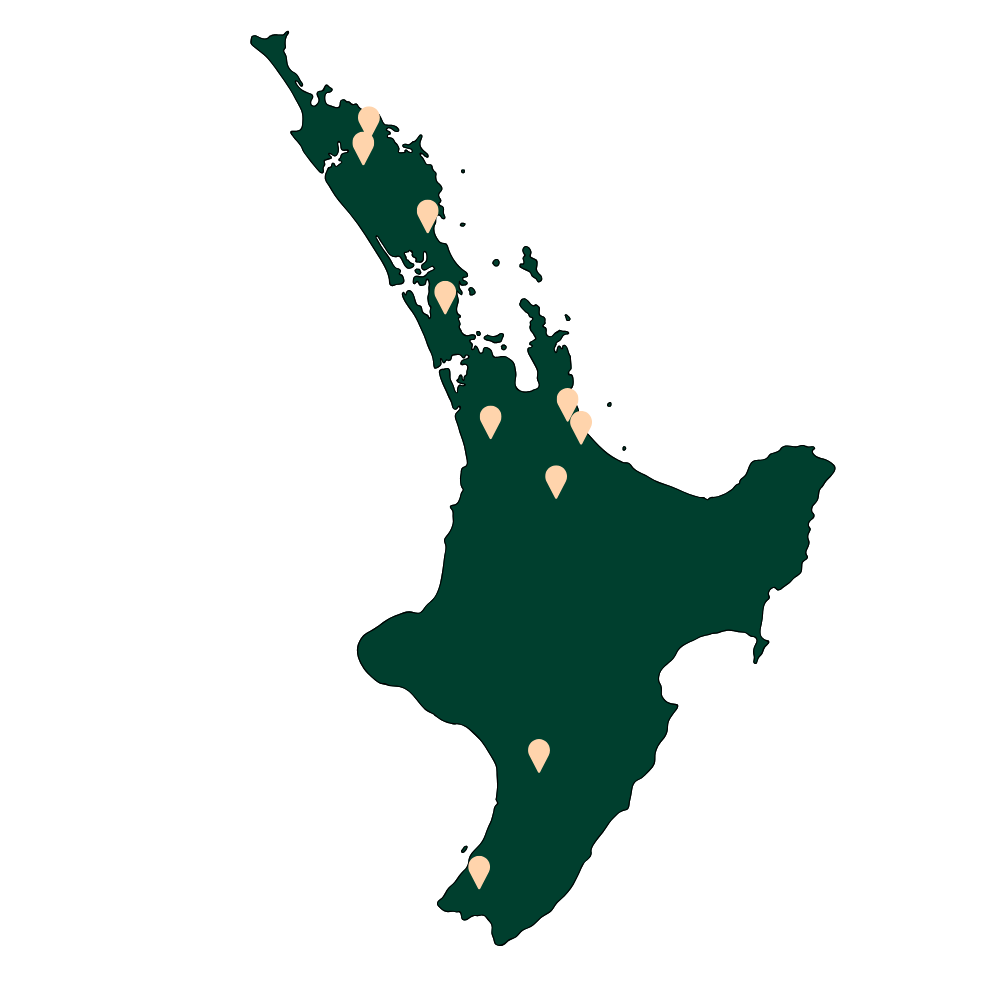
 North Island
- Kerikeri / Waipapa
- Kaikohe
- Waipu / Ruakākā
- Silverdale
- Waihi
- Huntly
- Ōmakoroa
- Tokoroa
- Palmerston North
- Upper Hutt
New Zealand will need more public EV chargers when travelling around the country. But how many — and where?
We've worked with DETA Consulting and all 29 lines companies to map New Zealand’s EV journey charging needs through to 2030. These are the EV chargers that drivers rely on when taking road trips around the country.
Lines companies want to support an efficient rollout of public EV chargers. This is why they have proactively identified suitable sites, available network capacity and indicative connection costs. The research also helps make sure chargers are built where they are genuinely needed — and avoid overbuilding where we already have enough.
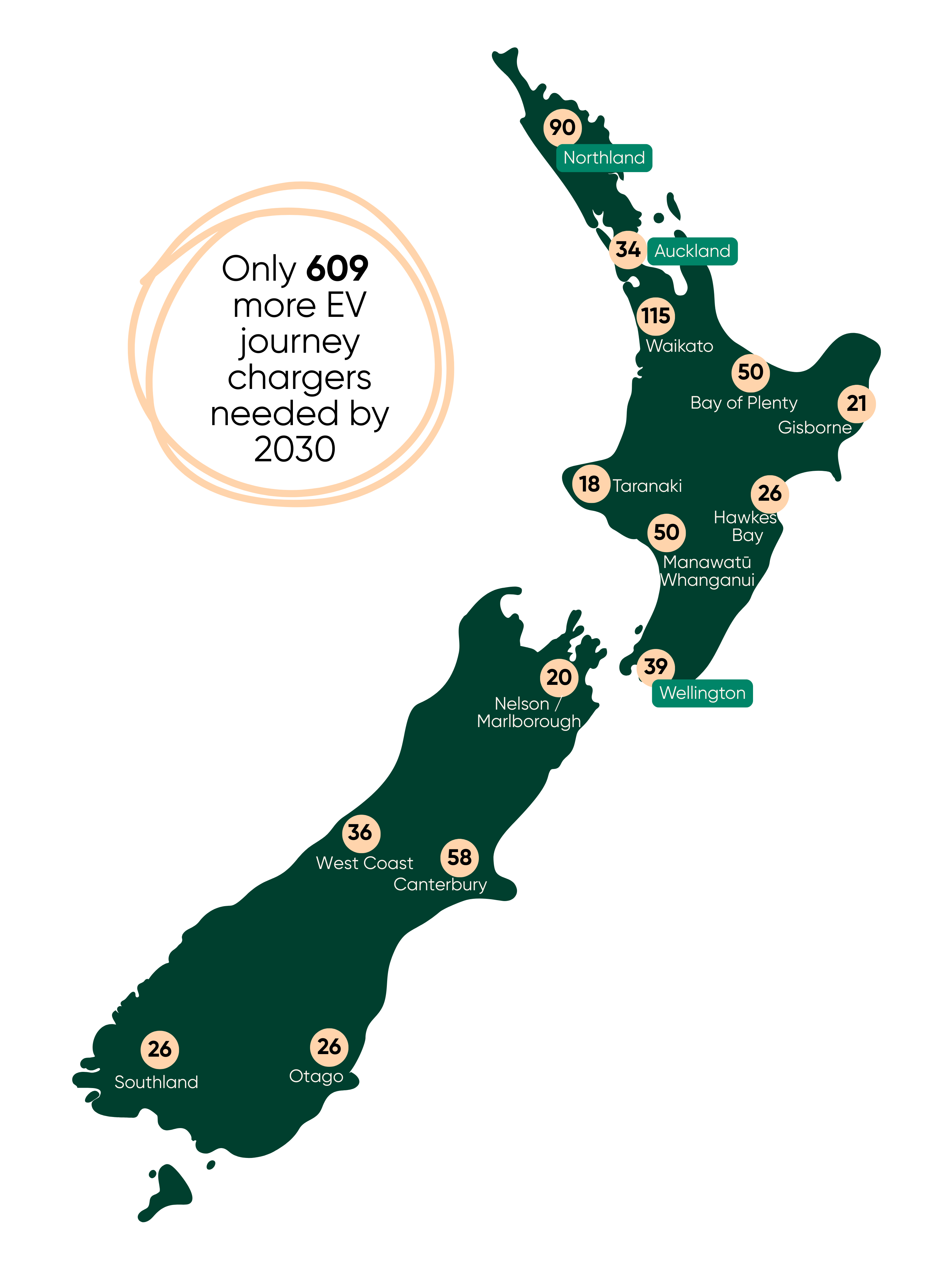 By 2030, we estimate that Aotearoa will need:
If larger chargers (like 100–300 kW) are installed, fewer units would be required to meet the same demand. If 100 kW chargers were used to represent the demand, 336 100 kW chargers would be needed to meet peak demand by 2030 (243 in the North Island and 93 in the South Island).
This modelling shows we are not facing a blanket shortfall of chargers across the country.
There are long stretches of travel routes that are already well serviced by EV journey chargers like:
But there are some travel routes that require significantly more charging like:
The priority right now should be targeted investment. Locations where additional EV journey chargers are most needed are:
North Island
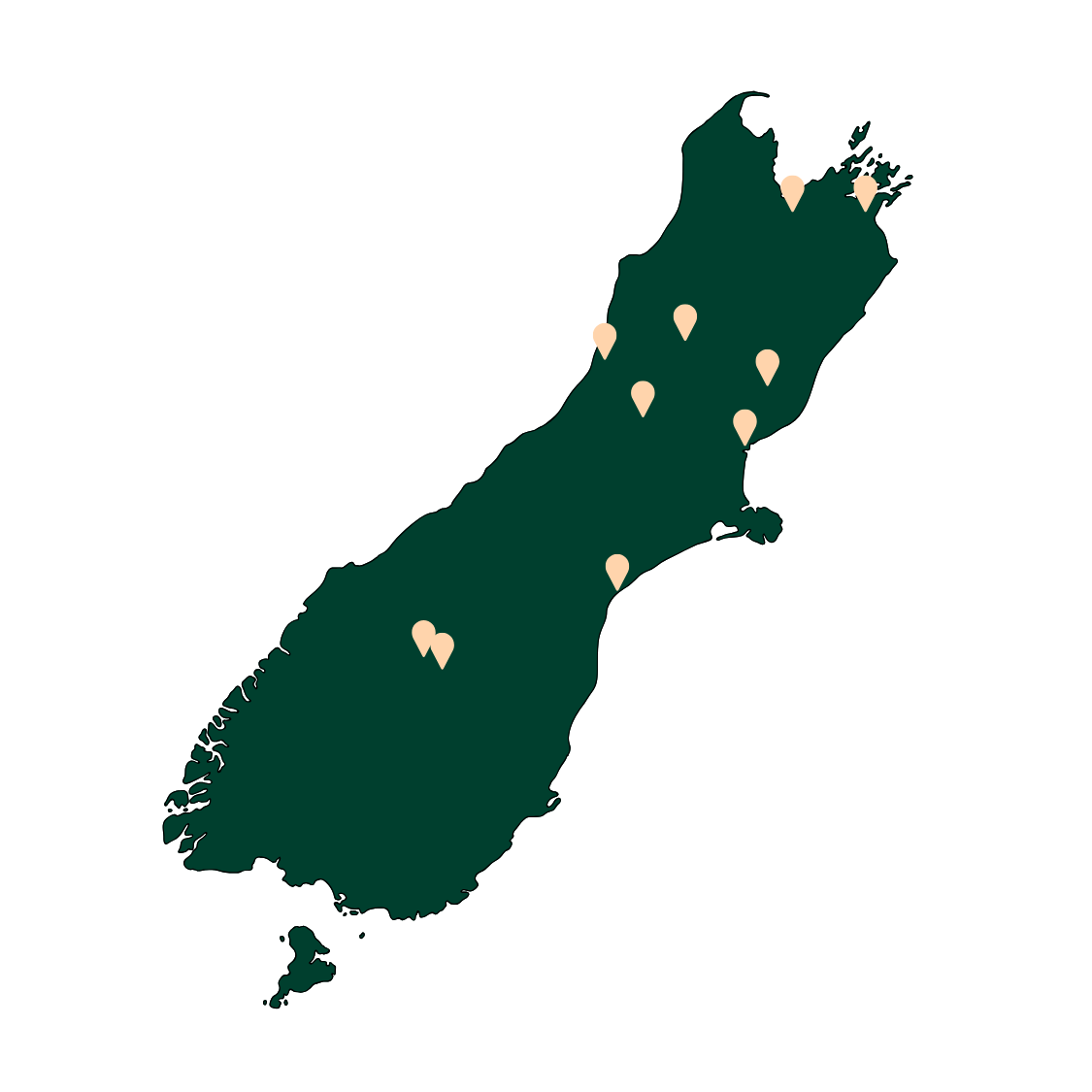 South Island
This analysis focused specifically on ‘light vehicle journey charging’ along state highways. It does not include destination charging in towns or heavy vehicle charging.
The modelling considered:
We deliberately used conservative assumptions to better reflect what EV drivers experience in practice.
Lines companies also identified indicative connection costs for potential charging sites.
On average, connection costs are around $60,000 per site in the North Island and around $63,000 per site in the South Island. Installing sufficient journey charging infrastructure is likely to cost more in the South Island because the North Island’s larger population drives higher and more consistent traffic volumes on state highways. As a result, chargers sized to meet peak demand in the North Island are used more regularly throughout the year, making them more economical to install and operate.
But these are just average costs. Some charging stations will cost a lot more to connect than others due to things like their location and nearby infrastructure.
Springs Junction, Arthur's Pass, Tarras, Fairlie/Geraldine, Mt Cook, Martinborough, Kaikohe, and Te Haroto.
We think that these less economical locations may need targeted funding support from the Government.
The Government has set a target of 10,000 public EV charging points by 2030. That’s a huge number, and data is needed to figure out how many we need and where they are needed. This research helps us get a step closer and ensure we build smart — and also avoid overbuilding where we already have enough.
This research is just one piece of the puzzle we need. But it helps to make sure:
Lines companies are committed to playing a constructive role in enabling New Zealand’s shift to electric transport — in a way that is reliable, efficient and affordable for consumers.
You can download the detailed reports below: